One reason fishing arcade games have lasted so long is that the underlying structure is easy to understand without turning dull right away. Players only need to grasp a few things: where the targets are moving, when to shoot, and how the game says yes, that counted. That simplicity works especially well in the browser because it rewards instant play instead of setup screens.
The basic loop is simple but surprisingly elastic
At the core, the loop is straightforward. Targets move across the screen. The player fires at them. A hit creates some kind of payoff, whether that is a score increase, a visual effect, or a feeling of momentum. Then the screen resets just enough for the player to try again. The loop sounds tiny, but it has room for a lot of variation because target speed, density, direction, and visual emphasis can all change how each round feels.
This is why a page like Deep Sea Mode can feel friendly even though the mechanics are uncomplicated. The player gets motion, pressure, and feedback almost instantly. There is no need to explain a giant ruleset first because watching fish move already teaches what matters.
Movement patterns do most of the teaching
Good fishing arcade design relies on motion more than text. Fish should not move randomly. They need to form patterns that are readable enough for anticipation but varied enough that the player still has to react. That balance is what makes aiming ahead feel satisfying. If movement is too chaotic, the player cannot form a rhythm. If it is too predictable, the session loses energy.
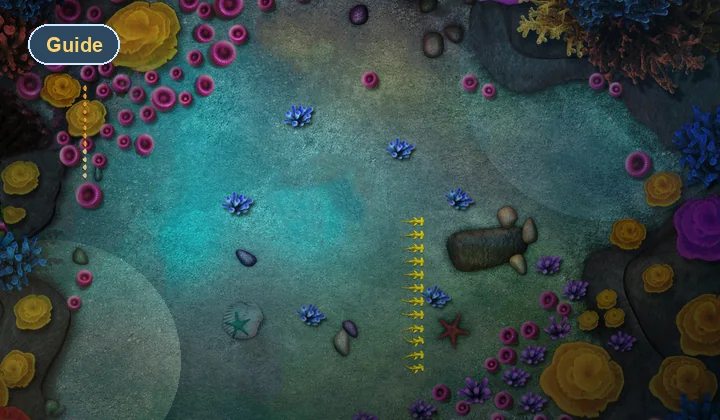
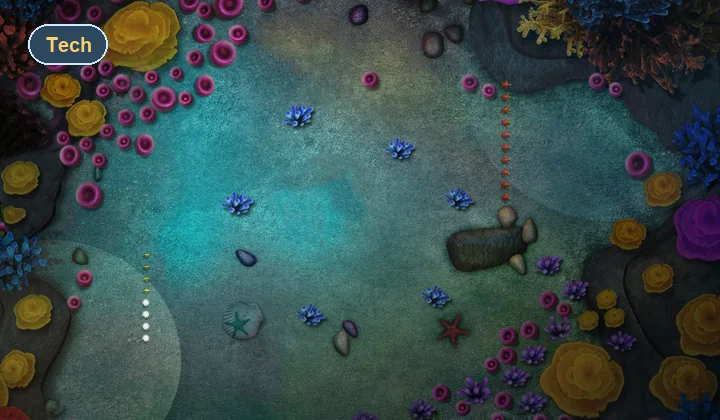
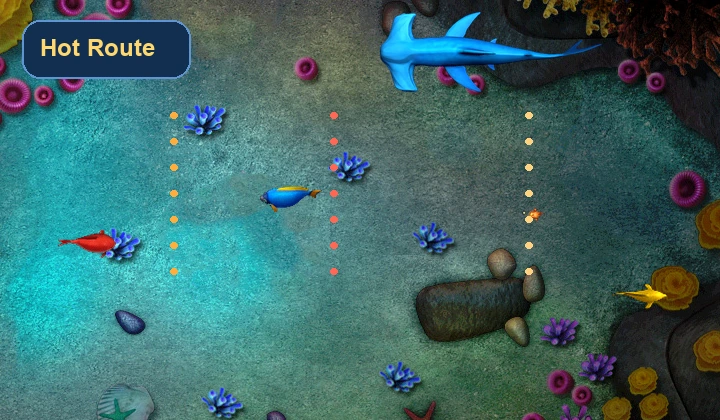
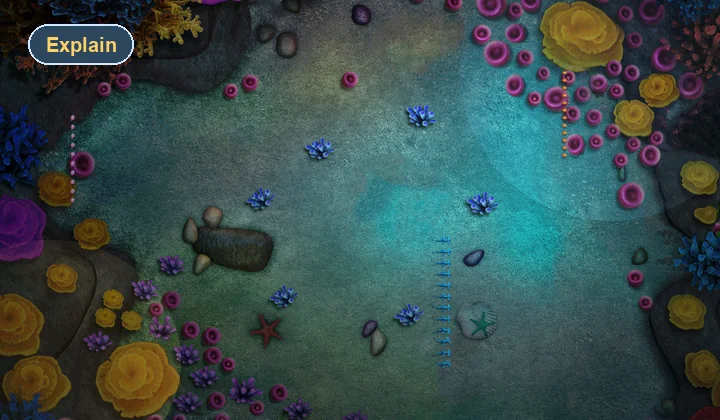
Designers often use lanes, clusters, or recurring travel arcs to make the screen legible. Even when the player cannot name those patterns, they feel them. After a few rounds, they start firing earlier, reading the center lane better, and recognizing which targets deserve attention. That is the kind of learning curve that works well in the browser because it happens through play rather than tutorial screens.
Reward feedback turns small wins into momentum
Arcade fishing games do not depend on realism. They depend on satisfying feedback. When the player hits a target, the game needs to acknowledge it quickly and clearly. That can be visual, auditory, or numeric. The exact style changes from game to game, but the design goal stays the same: a shot should never feel ambiguous if it mattered.
This is one reason responsive rendering matters so much, which is something explored more directly in Why WebGL Browser Games Feel Better. When the feedback lands quickly, the player trusts the game more. That trust makes them willing to continue experimenting with timing and target choice. Without it, the loop starts to feel mushy.
Short sessions are part of the design, not a compromise
Browser games are often treated as if they should apologize for being short-session experiences. Fishing arcade games show why that is backward. Short sessions are a strength when the loop is built for them. You can open the page, play a few rounds, and still feel like you had a complete experience. That is much harder in genres that depend on long buildup or heavy progression systems.
The route structure around the game matters here too. Ocean Hunter gives the player another flavor of the same core loop, while Classic Arcade offers a category shift if they want a break. Those route differences help the site feel deeper without forcing every session to become longer.
Why the genre fits small browser game sites so well
Fishing arcade games work online for the same reason classic reaction games and light slot routes work online: they are easy to enter and easy to revisit. The player understands the objective quickly, but there is still room for skill through timing and target choice. That creates a valuable middle ground between mindless clicking and overly technical play.
They also pair well with visual identity. Ocean themes, bright fish silhouettes, and moving schools give a small game site plenty to work with. That is why a game-focused homepage can feel alive without needing fake metrics or placeholder cards. The game already has real motion and real atmosphere to lean on.
What players actually improve at
New players often think they need to click faster. In reality, they usually improve by reading the screen better. They learn to fire ahead of movement instead of at it. They stop chasing every target. They notice where traffic tends to become readable and which fish are worth prioritizing. That shift from impulse to rhythm is the hidden skill layer in the genre.
Once a player feels that shift, the session becomes more satisfying very quickly. The game no longer feels like random motion. It starts to feel like a pattern-reading exercise with a bright, lively reward structure wrapped around it. That is the moment where a browser fishing game stops being a novelty and starts feeling replayable.
Where to see these ideas in action
If you want to watch the mechanic logic with fresh eyes, open the featured game page and focus on movement rather than score for a few rounds. Then compare that to Deep Sea Mode and Ocean Hunter. The underlying rules are close, but framing and pacing change the feel a lot.
And if you want the broader category context, the companion read is 5 Fishing Browser Games I Kept Playing, which is a more personal version of the same conversation.